Fiber Optic PLC Splitters vs. FBT Splitters: Which Is Right for Your Application?
A Quick Dive into the World of Fiber Optic Technology
Fiber optic technology has revolutionized the way we communicate and transmit data, offering unparalleled speed and reliability. In this section, we will explore the basics of Fiber Optic communication and understand the critical role that splitters play in fiber networks.
The Basics of Fiber Optic Communication
Fiber optics work by transmitting data through Fiber Optic cables using pulses of light. These cables are made of thin strands of glass or plastic that can carry digital information over long distances with minimal signal loss. The role of splitters in fiber networks is crucial as they enable a single optical signal to be split into multiple signals, allowing for efficient distribution of data to different locations.
The Importance of Choosing the Right Splitter
Selecting the appropriate splitter for your application is essential due to its significant impact on performance and cost considerations. A well-chosen splitter can ensure optimal signal strength and integrity, while also minimizing unnecessary expenses.
Impact on Performance
The choice of splitter directly influences the overall performance of a fiber optic network. An efficient splitter ensures that each split signal maintains its quality, minimizing signal degradation and ensuring reliable data transmission.
Cost Considerations
Choosing the right splitter also has cost implications. While high-quality splitters may have a higher initial investment, they often lead to long-term cost savings by reducing maintenance needs and ensuring consistent performance.
Understanding PLC Splitters
Now, let's delve into the world of PLC (Planar Lightwave Circuit) splitters and gain a comprehensive understanding of their technology, advantages, and common applications.
What is a PLC Splitter?
PLC splitters are key components in fiber optic networks that utilize an integrated waveguide optical power distribution device based on a quartz substrate. The technology behind PLC splitters involves creating a passive optical signal by an integrated planar waveguide circuit. This process allows for efficient splitting of Fiber Optic signals with minimal loss and high reliability. The compact size and exceptional performance make PLC splitters highly sought after in various fiber optic applications.
The Technology Behind PLC Splitters
The core technology of PLC splitters lies in their ability to evenly split input signals into multiple outputs using a combination of waveguide circuits. These circuits are fabricated using lithography onto a silica glass substrate, ensuring precise signal distribution without the need for additional power sources or active components.
Advantages of Using PLC Splitters
One of the primary advantages of utilizing PLC splitters is their superior performance in terms of low insertion loss, uniform splitting ratios, and excellent polarization-dependent loss characteristics. Additionally, they offer broader operating wavelengths and temperature ranges compared to traditional FBT (Fused Biconical Taper) splitters, making them suitable for diverse environmental conditions and network requirements.
Common Applications of PLC Splitters
In the realm of telecommunications, PLC splitters are widely employed to facilitate the distribution of optical signals from central offices to multiple customer premises. Their ability to efficiently divide signals makes them indispensable in enabling reliable communication services across extensive networks. Furthermore, in data centers where seamless data transmission is paramount, PLC splitters play a crucial role in managing and distributing large volumes of data with minimal signal degradation.
Getting to Know FBT Splitters
As we continue our exploration of fiber optic splitters, it's essential to understand the unique characteristics and applications of Fused Biconical Taper (FBT) splitters. These devices offer distinct advantages and are particularly well-suited for specific systems and projects.

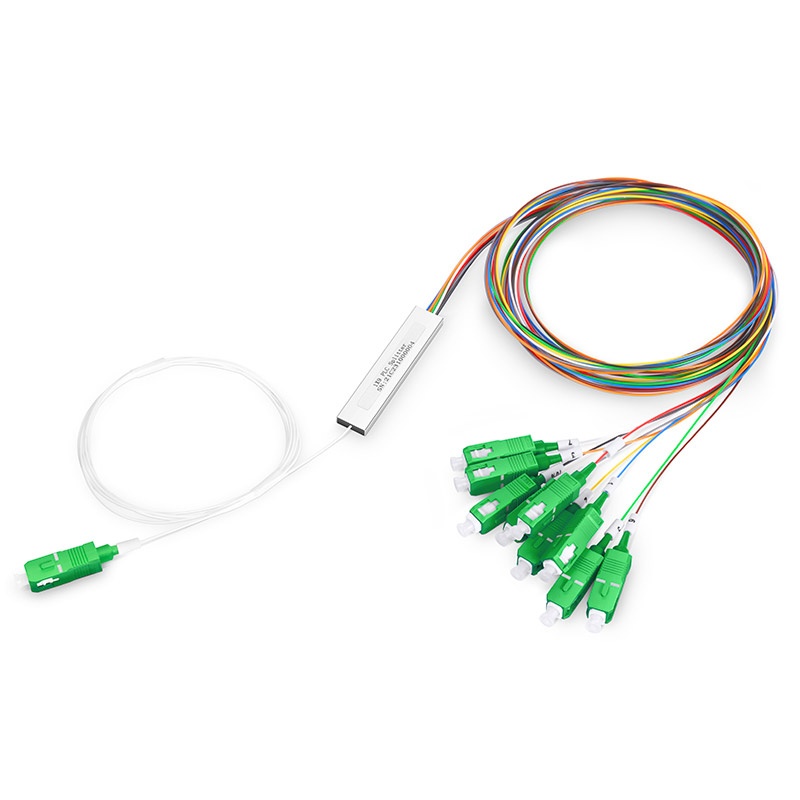
1x9 30:70 Un-balanced PLC Splitter
1x 9 Unbalanced Blockless Fiber PLC Splitter, Singlemode, 900μm Fiber, SC/APC Connector
What is an FBT Splitter?

Full-Width Slider
Click on the image to edit slides.

Full-Width Slider
Click on the image to edit slides.
FBT splitters are crafted using a process known as fused biconical tapering, where two fibers are precisely aligned and then fused together. This fusion enables the transfer of optical power from one fiber to multiple output fibers through a tapered section. The intricate process results in a robust and reliable splitter that can effectively divide optical signals without compromising signal integrity.
The Process of Fused Biconical Tapering
The manufacturing process of FBT splitters involves aligning and fusing two or more optical fibers together, followed by the precise tapering of the fused region. This tapering allows for the controlled transfer of optical power from one fiber to several output fibers, ensuring consistent signal splitting with minimal loss.
Benefits of FBT Splitters
FBT splitters offer several notable benefits, including their simplicity, durability, and cost-effectiveness. Their straightforward manufacturing process makes them a practical choice for various applications, especially those requiring customized split ratios and specific packaging requirements. Additionally, FBT splitters exhibit excellent environmental stability and mechanical strength, making them suitable for deployment in challenging operating conditions.
Where FBT Splitters Shine
In certain scenarios, FBT splitters outshine other types due to their unique characteristics and cost-efficient nature.
In Analog Systems
FBT splitters are particularly well-suited for analog systems where precise signal splitting is crucial for maintaining signal integrity. Their ability to accurately divide optical signals without introducing significant losses makes them ideal for applications such as cable television distribution networks and analog sensor systems.
In Cost-sensitive Projects
For projects with budget constraints or those requiring customized split ratios, FBT splitters offer a cost-effective solution without compromising performance. Their versatility in accommodating specific split ratios makes them an attractive option for cost-sensitive projects where tailored signal distribution is paramount.
Choosing the Right Splitter for Your Application
Now that we have gained a comprehensive understanding of PLC and FBT splitters, it's essential to compare their performance differences and consider cost and size considerations before making a decision.
Comparing PLC and FBT Splitters
Performance Differences
When comparing PLC splitters with FBT splitters, several performance differences come to light. PLC splitters are known for their superior performance in terms of low insertion loss, uniform splitting ratios, and excellent polarization-dependent loss characteristics. On the other hand, while FBT splitters offer simplicity, durability, and cost-effectiveness, they may not match the same level of performance as PLC splitters. It's crucial to assess the specific performance requirements of your application to determine which type of splitter aligns best with your needs.
Cost and Size Considerations
In addition to performance disparities, cost and size considerations play a significant role in the selection process. PLC splitters, despite potentially requiring a higher initial investment, often lead to long-term cost savings by reducing maintenance needs and ensuring consistent performance over an extended period. Their compact size also makes them suitable for applications where space is limited. Conversely, FBT splitters are favored for their cost-effectiveness and versatility in accommodating specific split ratios. However, they may require more frequent maintenance compared to PLC splitters, impacting long-term costs.
Questions to Ask Before Making a Decision
Before making a decision on which splitter is right for your application, there are essential questions that need careful consideration:
What is Your Budget?
Understanding your budget constraints is crucial when choosing between PLC and FBT splitters. While PLC splitters may require a higher initial investment, they often lead to long-term cost savings due to their reliable performance and reduced maintenance needs. On the other hand, if budget constraints are paramount or if customized split ratios are necessary for your project, FBT splitters offer a cost-effective solution without compromising performance.
What are Your Performance Requirements?
Assessing your specific performance requirements is vital in determining whether PLC or FBT splitters are better suited for your application. If you prioritize low insertion loss, uniform splitting ratios, and excellent polarization-dependent loss characteristics, then PLC splitters may be the ideal choice for ensuring optimal signal strength and integrity. Conversely, if simplicity, durability, and cost-effectiveness align with your project's needs without requiring top-tier performance specifications, then FBT splitters could be the more suitable option.
Final Thoughts
Making an Informed Decision
As we conclude our exploration of fiber optic splitters, it's crucial to summarize the key points and provide a personal recommendation to assist in making an informed decision.
Recap of Key Points
Throughout this discussion, we've delved into the world of fiber optic technology, understanding the critical role of splitters in fiber networks. We've explored the technology and applications of both PLC and FBT splitters, highlighting their unique characteristics and advantages. Additionally, we've compared their performance differences and considered cost and size implications. It's essential to remember that the choice between PLC and FBT splitters should align with specific performance requirements and budget considerations.
Personal Recommendation
Based on the comprehensive analysis of PLC and FBT splitters, my personal recommendation leans towards PLC splitters for applications where optimal performance, reliability, and long-term cost savings are paramount. The superior performance attributes of PLC splitters, including low insertion loss, uniform splitting ratios, and excellent polarization-dependent loss characteristics, make them an ideal choice for ensuring consistent signal strength and integrity. While FBT splitters offer simplicity and cost-effectiveness, they may require more frequent maintenance over time.
The Future of Fiber Optic Splitters
Looking ahead, the future of fiber optic splitters holds promising innovations that aim to further enhance performance, efficiency, and versatility in various applications.
Innovations on the Horizon
Innovations in fiber optic splitter technology are anticipated to focus on enhancing integration capabilities within increasingly complex network architectures. This includes advancements in miniaturization for space-constrained environments and improvements in spectral management for expanded wavelength utilization. Furthermore, developments in manufacturing processes may lead to more cost-effective solutions without compromising performance.
Staying Informed
To stay abreast of these advancements in fiber optic splitter technology, it is essential to remain engaged with industry publications, attend relevant conferences or webinars, and actively participate in discussions within professional networks. By staying informed about emerging trends and technological advancements, individuals can make well-informed decisions when selecting fiber optic splitters for their specific applications.
In conclusion, choosing the right splitter for your application involves a careful evaluation of performance requirements, budget constraints, and future scalability. By staying informed about industry developments and considering the insights shared here, you can confidently navigate the diverse landscape of fiber optic splitters to meet your unique networking needs.
